
Physiomobile Partner Learning
The Role of Physiotherapists in an Ageing Population
How physiotherapists can support healthy ageing, functional independence, falls prevention and participation through individualised, coordinated care.
An ageing population is not a story in which everyone becomes frail. People of the same age can have very different capacities, health conditions, goals and support. A physiotherapist’s role is to understand function—what a person needs and wants to do in daily life—and help build a safe, meaningful and measurable pathway.
Healthy ageing is not the absence of every diagnosis. WHO defines it as developing and maintaining the functional ability that enables well-being in older age. Functional ability reflects a person’s physical and mental capacities, their environment and the interaction between them. Age or diagnosis alone does not determine a person’s potential.
Malaysia’s context: two age thresholds, two purposes
The Department of Statistics Malaysia (DOSM) Current Population Estimates 2025 puts Malaysia’s total population at 34.2 million. In that age-structure release, 8.0% of the total population was aged 65 years and over, up from 7.6% in 2024. DOSM also reported that 12 states had reached its ageing-state threshold of at least 7% aged 65+.
The Ministry of Health Malaysia Action Plan for Older Persons Health Services 2023–2030 uses 60 years and over for older-person services. These figures are not interchangeable: 65+ is the age band used in this DOSM population-structure release, while 60+ defines the MOH programme population. The denominator and purpose should always travel with the number.
What do physiotherapists contribute?
1. Assess function, risk and what matters
Assessment begins with the person’s story: difficult movements, valued activities, falls history, pain, fatigue, confidence, cognition, vision, hearing, nutrition, sleep, continence, medication, long-term conditions and social support. Examination may include strength, balance, gait, transfers, activity tolerance and real tasks such as standing from a chair or using stairs.
Frailty is not a label for every older person. When frailty or multimorbidity is present, it can guide monitoring, progression and team support—not justify assumptions that improvement or participation is impossible.
2. Agree shared functional goals
Goals are built together rather than assigned by age. They might include walking to a nearby shop, praying in a safe position, caring for a grandchild, returning to a garden, transferring from bed or joining a community activity. Specific shared functional goals connect therapy to participation and create a basis for review.
3. Build an individualised and progressive plan
A plan may combine strength, balance, aerobic and functional practice, with mobility work where relevant. Selection, dosage, rest, assistance and progression depend on assessment, medical conditions, medicines, symptoms, preferences and response. There is no one-size-fits-all exercise prescription for older people.
After stroke or with another neurological condition, priorities may include movement control, transfers, gait, assistive devices and repeated task practice. With multimorbidity, the priority may be pacing activity towards one daily-life goal without aggravating symptoms. Physiotherapists do not prescribe medication; medication concerns belong in collaboration with the treating doctor or pharmacist.
4. Reduce falls risk without restricting life
WHO estimates that 37.3 million falls worldwide are severe enough to require medical attention each year, across all ages; this is not a Malaysia-specific or older-person incidence rate. For older people, WHO lists gait, balance and functional training, home assessment and modification, and multifactorial assessment followed by tailored intervention and referral.
Physiotherapists can assess gait, balance, strength, footwear, assistive devices and environmental hazards. Vision, dizziness, blood pressure, nutrition and medicine-related issues may require other professionals. The aim is not to stop movement but to support safer, more confident activity.
5. Work with the real home and community
A home visit can reveal narrow routes, poor lighting, loose rugs, chair height, bathroom layout and how a person actually moves. Housecall, community and hybrid care can make practice more relevant, but suitability still depends on risk, access, preference and clinical need. Major adaptations or particular equipment may require collaboration, including occupational therapy.
6. Educate the caregiver while preserving autonomy
With the person’s consent, a caregiver can learn safe assistance, equipment use, consistent cueing, practice routines and signs to stop or seek help. Education should protect the older person’s dignity and choices and recognise caregiver needs rather than simply transferring clinical work to the family.
7. Review outcomes and coordinate care
Outcome review can combine suitable measures—such as transfers, walking speed or distance, balance, activity tolerance, confidence and goal attainment. If progress differs from expectations, the physiotherapist reassesses the hypothesis, dosage, barriers, adherence and need for referral.
A practical pathway from screen to review
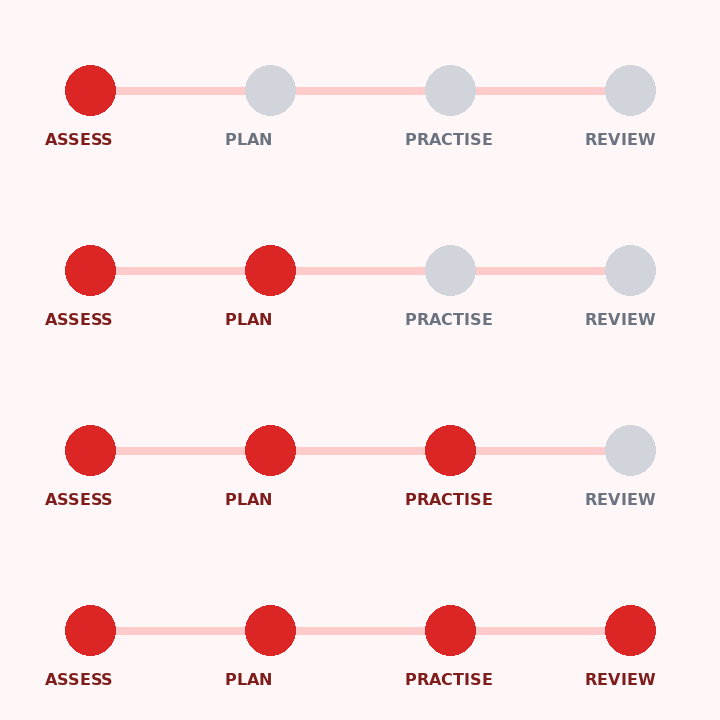
- Assess and screen: function, falls, frailty, stroke or neurological conditions, multimorbidity, symptoms, cognition, senses, nutrition, medicines and environment.
- Agree shared functional goals: select activities that matter and record a relevant baseline.
- Individualise practice: combine strength, balance, aerobic, mobility and functional work according to tolerance.
- Include caregiver and environment: teach agreed support, review equipment and reduce identified home barriers.
- Review outcomes: repeat measures, check participation and adverse responses, and adapt the plan.
- Coordinate and refer: involve doctors, nurses, pharmacists, occupational therapists, dietitians, speech-language therapists, eye-care professionals or social services according to the issue.
When to stop and escalate
Follow local emergency pathways for red flags such as new chest pain, severe breathlessness, fainting, new signs of stroke, altered consciousness, or a fall with head injury or suspected fracture. Seek prompt medical assessment for sudden decline, unexpected progressive symptoms or needs outside the clinician’s competence and setting. This is not an exhaustive list.
Sources and further reading
- Department of Statistics Malaysia: Current Population Estimates, 2025
- Ministry of Health Malaysia: Action Plan for Older Persons Health Services 2023–2030
- World Health Organization: Ageing and healthy ageing
- World Health Organization: Integrated Care for Older People (ICOPE)
- World Health Organization: Falls fact sheet
This educational article is not individual clinical advice and has not been presented as a named clinician review. Applicable Malaysian law, professional standards, local protocols and case-specific clinical judgement prevail.
Share this article
Share a practical, respectful approach to healthy ageing and functional independence.